How to Pick a Freestyle Type Beat in 2026 That Actually Holds a Hard Flow
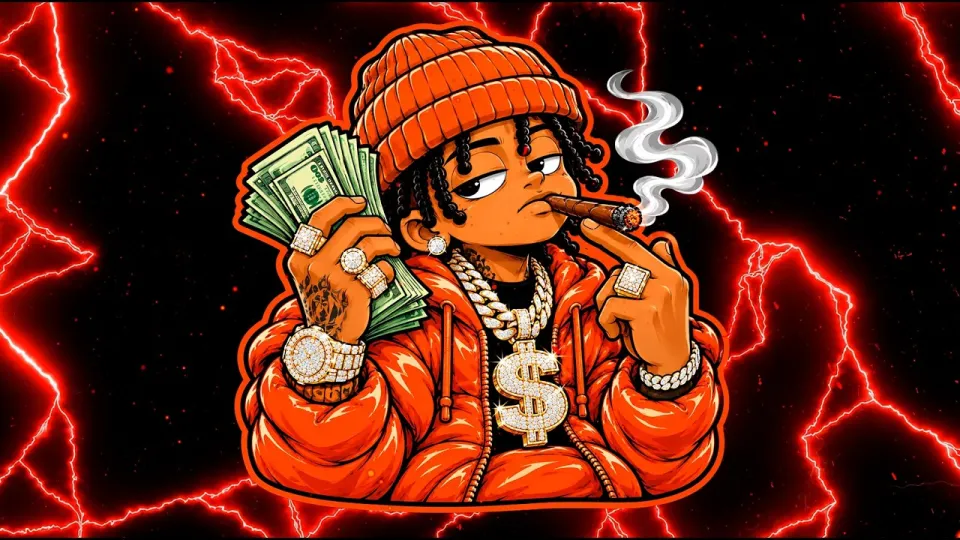
Video: FREESTYLE TYPE BEAT - ''I HAVE HARD FLOW'' | Trap Instrumental 2026 | Rap Type Beat
Want articles like this for your own video to promote it on YouTube and Google? Order them through the Telegram bot @sat_sit_bot. Articles with your video embedded are written and posted by the bot itself — on popular topical sites (no ads). Try it free: 50 articles on us.
· based on the channel Rey Pandora Beats
A freestyle type beat is a rap instrumental built for continuous, unrehearsed rapping: a steady loop, a clear pocket and enough space that the rapper, not the arrangement, carries the track. Rey Pandora Beats' "I HAVE HARD FLOW" is a 2026 trap instrumental in exactly that format, published on 19 October 2026 and offered for free non-monetized use with credit, with commercial licenses available through the producer's BeatStars beat store.
What a freestyle type beat actually is and how it differs from a song beat
A freestyle type beat is an instrumental that leaves the song structure open so a rapper can keep going without waiting for a hook. Song beats are usually arranged for a finished record: intro, verse, chorus, verse, bridge, outro, with drops and switch-ups timed to a written structure. A freestyle beat instead leans on repetition — a four- or eight-bar loop that stays consistent, a drum pattern that does not suddenly disappear, and a bassline that holds the same rhythm across the whole take.
The practical consequences for the rapper:
- The loop must survive three or four minutes of the same flow without becoming boring, which is why texture changes (filter moves, hi-hat rolls, a dropped 808) matter more than big structural cuts.
- The drum pocket must be unambiguous, so the rapper can find the downbeat by ear within the first bar.
- The low end must leave room for a vocal, because freestyle takes are rarely mixed heavily.
"I HAVE HARD FLOW" is labeled as a trap instrumental and a rap type beat, and it sits in the aggressive, hard-beat corner of the catalog rather than the melodic one, which suits punchline-driven or battle-style freestyling.
How to test whether a beat can carry a hard flow
A hard flow depends on the beat giving the rapper a stable grid plus a little friction, not on the beat being loud. Run these checks before committing to a take:
- Count the pocket. Play the first eight bars and clap on the snare. If you hesitate once, the pattern is too syncopated for off-the-top rapping.
- Check the hi-hat subdivision. Triplet and 32nd-note rolls push the rapper toward faster cadences; straight 16ths leave room for slower, heavier delivery. Decide which flow you want before you record.
- Listen for empty space. A hard flow needs gaps between the 808 hits to land consonants. If the low end is continuous, the vocal turns to mud.
- Test two tempos. Many trap instrumentals sit in the 130–150 BPM range counted in half-time, which reads as 65–75 BPM to the rapper. Try writing at both counts and keep the one where your sentences fit.
- Record a 60-second scratch take. If you run out of breath before the loop repeats, the beat is faster than your flow, not the other way around.
Licensing: free use versus commercial release
Rey Pandora Beats splits usage into two clear tracks, and the distinction matters more than the beat itself for anyone planning to publish.
Free use. The beat can be used at no cost in YouTube videos and personal projects as long as the project is not monetized, and the producer must be credited as Rey Pandora Beats in the description or credits. That covers practice videos, cyphers, non-monetized freestyle uploads and portfolio material.
Commercial use. Monetizing a YouTube video, or distributing the track on Spotify, Apple Music, iTunes and similar platforms, requires a purchased commercial license. That is the standard model across the type beat market: the instrumental is free to rap on, the release is not free to sell.
A practical checklist before uploading anything built on the beat:
- Confirm whether the upload will be monetized now or later — ad revenue, streaming royalties and paid placements all count as commercial.
- Add the credit line "Prod. Rey Pandora Beats" to the description or video credits.
- Buy the commercial license through the BeatStars store before the release goes live, not after a claim appears.
- Keep the license receipt alongside your project files in case a distributor or platform asks for proof.
Where this beat fits and what to write over it
A hard trap instrumental like this one rewards content that matches its weight: punchline-heavy verses, aggressive delivery, battle rounds, or drill-adjacent storytelling. It is a weaker fit for melodic, sung-rap hooks, because the arrangement is built around percussion and low end rather than chord progression.
Listeners responding to the track tend to react to two things — the overall mood and the visual presentation. Comments on the upload note the hard vibe and, in one case, nostalgia for the channel's older visuals, which is a useful reminder that a type beat upload is a package: the instrumental, the artwork and the title all signal what kind of rapper should click. When you are choosing a beat for your own project, judge the package the same way your future listeners will.
For writers, three starting points that work over a hard freestyle beat:
- Punchline stacking. Short bars, one image per line, no narrative arc — the flow itself is the hook.
- Technical runs. Deliberate bursts of double-time over the hi-hat rolls, then a return to the main pocket.
- Call-and-response hooks. Even in a freestyle format, a repeated two-word phrase every eight bars gives the take a spine.
Common questions from rappers before they record
The same doubts come up repeatedly around freestyle type beats, and they are worth answering directly. Can you freestyle over a beat you have never heard? Yes, but only if the loop is stable — pick instrumentals with a repeating eight-bar structure and avoid anything with a beat switch in the first minute. Should you write or go off the top? Both are valid; writing first and then loosening the delivery in the booth usually produces a harder result than pure improvisation. Do you need a mixed vocal to upload a freestyle? No, but a basic chain — noise gate, EQ cut below 100 Hz, light compression — keeps the vocal above the 808. Does the producer's genre tag matter? It is a search tool, not a rule: a "hard type beat" can carry a melodic verse if the tempo and pocket fit.
All links from the video
- Beat store and commercial licenses: https://reypandorabeatsoff.beatstars.com/
- Producer contact: papapandorabeat@gmail.com
- Instagram: @rey.pandora
Summary
"I HAVE HARD FLOW" is a 2026 trap instrumental from Rey Pandora Beats, published on 19 October 2026 and positioned as a freestyle type beat for aggressive, off-the-top rapping. It is free for non-monetized use with a producer credit, and a commercial license is required for monetized videos and streaming releases. Test any freestyle beat for pocket stability, hi-hat subdivision and space in the low end before you record, then check the license before you publish. The full catalog and commercial licenses are available at the Rey Pandora Beats store, where you can pick up the paperwork for a release in the same place you found the beat.
Key takeaways
- A freestyle type beat is an open-format rap instrumental built for continuous, unrehearsed rapping rather than a fixed song structure.
- Rey Pandora Beats published "I HAVE HARD FLOW" on 19 October 2026 as a free trap instrumental tagged freestyle type beat and rap type beat.
- Free use of the beat is allowed only in non-monetized projects with a producer credit to Rey Pandora Beats.
- Monetized YouTube videos and distribution on Spotify, Apple Music or iTunes require a purchased commercial license.
- Commercial licenses are sold through the producer's BeatStars store at reypandorabeatsoff.beatstars.com.
Questions & answers
Can I use a freestyle type beat for free on YouTube?
Yes, if the video is not monetized. Rey Pandora Beats allows free use in YouTube videos and personal projects provided the producer is credited as Rey Pandora Beats in the description or credits. The moment you enable monetization, a commercial license is required.
Do I need a license to put a type beat on Spotify or Apple Music?
Yes. Streaming distribution on Spotify, Apple Music, iTunes and similar platforms counts as commercial use, so you must purchase a commercial license before the track goes live. Free use covers only non-monetized projects.
How do I know if a beat suits a hard flow before I record?
Check three things: whether you can clap the snare pattern without hesitating, how dense the hi-hat rolls are, and whether the 808 leaves gaps for consonants. Record a one-minute scratch take — if you run out of breath before the loop repeats, the tempo is above your flow.
What tempo are trap type beats usually in?
Most sit between 130 and 150 BPM counted in half-time, which feels like 65–75 BPM to the rapper. Try writing at both counts and keep the one where your bars fit naturally, since the same instrumental can support a slow heavy delivery or a double-time run.
Source: FREESTYLE TYPE BEAT - ''I HAVE HARD FLOW'' | Trap Instrumental 2026 | Rap Type Beat · Markdown version